RC Verification Online | Verify Car & Bike RC Details on Parivahan
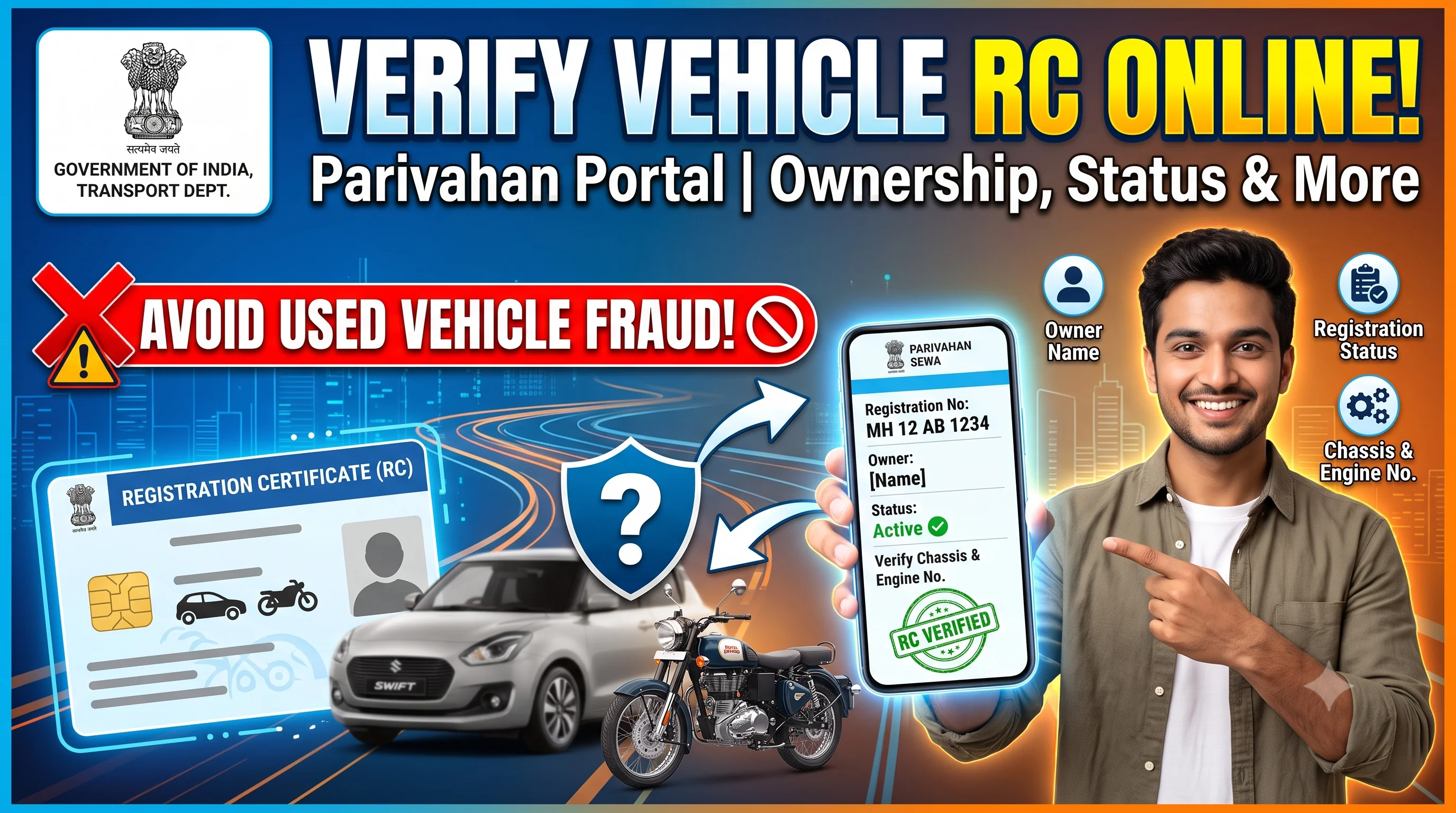
Start on the official Parivahan portal
Opens the official Parivahan portal in a new tab.
RC Verification – Quick Overview
| Details | Information |
|---|---|
| Service | RC Verification |
| Authority | Regional Transport Office (RTO) |
| Portal | Parivahan & Vahan |
| Mode | Online |
| Applicable Vehicles | Car, Bike, Scooter, Commercial Vehicle |
| Verification Time | Usually Instant |
| Registration Required | May vary by service |
| Purpose | Verify official vehicle registration details |
Quick Answer
RC Verification is the process of checking whether a vehicle's Registration Certificate (RC) information matches the official records maintained by the transport department. It helps confirm important details such as the registration number, vehicle class, fuel type, registration validity, and other publicly available vehicle information before purchasing or using a vehicle.
Before purchasing a used vehicle, you should first Check RC Details, then complete RC Verification to compare the information provided by the seller with official records. If everything matches, you can proceed with RC Transfer and later Download RC Online after ownership is updated.
Table of Contents
What is RC Verification?
RC Verification is the process of validating vehicle registration information using official government records.
When you perform an RC Verification, you compare the Registration Certificate information provided by the vehicle owner with the official records available through the transport department.
Verification helps ensure that:
- The registration number exists.
- Vehicle information is consistent.
- Registration details appear genuine.
- The vehicle information matches the available transport records.
This process is especially useful before:
- Buying a used vehicle.
- Applying for vehicle finance.
- Completing ownership transfer.
- Purchasing insurance.
- Verifying vehicle documents.
Think of RC Verification as an important safety check before making any major decision involving a vehicle.
Why is RC Verification Important?
Buying a used vehicle without verifying its Registration Certificate can expose buyers to unnecessary risks.
Although many sellers are genuine, mistakes in documentation or incomplete information can cause future complications.
RC Verification helps buyers make informed decisions by allowing them to review official vehicle records before completing a transaction.
Benefits include:
- Greater confidence during vehicle purchase.
- Easier ownership transfer.
- Better document verification.
- Reduced paperwork issues.
- Faster insurance processing.
- Better resale confidence.
Before making any payment, always compare the vehicle information shown through RC Details with the information available in the physical Registration Certificate.
Common Scenario
Imagine you're purchasing a five-year-old motorcycle from an online marketplace.
The seller provides:
- Registration Certificate
- Insurance
- Pollution Certificate
Everything appears genuine.
However, before making payment you should:
- Verify the Registration Certificate.
- Match the registration number.
- Compare the chassis number.
- Compare the engine number.
- Check registration validity.
- Review vehicle category.
Only after completing these checks should you proceed with RC Transfer.
Spending a few minutes on verification can help you avoid documentation problems later.
When Should You Perform RC Verification?
RC Verification is recommended in several situations.
Buying a Used Car
Before purchasing any second-hand car, verify its Registration Certificate to ensure the information matches official transport records.
Buying a Used Bike
Bike buyers should also verify registration details before completing the purchase.
Before RC Transfer
Always verify the Registration Certificate before starting RC Transfer. Doing so helps reduce the possibility of documentation issues during ownership transfer.
Before Purchasing Insurance
Insurance providers rely on accurate vehicle information. Verifying your Registration Certificate beforehand can help ensure the information you provide matches the registration records.
Before Applying for a Duplicate RC
If you're applying for a Duplicate RC, verifying the existing vehicle information first can help ensure the correct records are used during the application process.
Who Should Use RC Verification?
RC Verification is useful for many different users.
It is commonly used by:
- Used vehicle buyers.
- Vehicle owners.
- Dealers.
- Fleet operators.
- Insurance companies.
- Financial institutions.
- Vehicle verification agencies.
Anyone dealing with vehicle ownership or documentation can benefit from verifying the Registration Certificate before proceeding.
What Information Can Be Verified?
Depending on the available transport records, RC Verification may allow you to review information such as:
| Information | Available for Verification |
|---|---|
| Registration Number | ✅ |
| Vehicle Class | ✅ |
| Fuel Type | ✅ |
| Registration Date | ✅ |
| Vehicle Make | ✅ |
| Vehicle Model | ✅ |
| Registration Validity | ✅ |
| Owner Category | May Vary |
| Engine Details | Partial/Where Available |
| Chassis Details | Partial/Where Available |
The information available may vary depending on state transport rules and the official service being used.
Benefits of RC Verification
Performing RC Verification offers several advantages.
Better Buying Decisions
Buyers can compare official vehicle information before making payment.
Reduced Documentation Errors
Verification helps identify inconsistencies early, making future RTO services smoother.
Easier RC Transfer
Verified information can simplify the RC Transfer process.
Improved Record Accuracy
Vehicle owners can identify discrepancies and, if needed, apply for RC Correction.
Faster Digital Services
Once verification is complete, you can confidently use services such as RC Download or RC Update.
Did You Know?
Many buyers only verify the physical Registration Certificate but never compare it with official transport records.
Checking both the physical document and the available official registration information provides greater confidence that the vehicle details are consistent before completing a purchase.
RC Verification vs RC Details
Many users think these services are identical, but they serve different purposes.
| RC Verification | RC Details |
|---|---|
| Used to validate vehicle registration information. | Used to view Registration Certificate information. |
| Helps compare available records before a transaction. | Helps understand the vehicle's registered information. |
| Commonly used before buying or selling a vehicle. | Used whenever vehicle details need to be checked. |
Before You Verify — Checklist
Before performing RC Verification:
- Keep the vehicle registration number ready.
- Review the physical Registration Certificate.
- Compare vehicle make and model.
- Match the registration number.
- Compare engine and chassis details where available.
- Review insurance validity.
- Check Pollution Under Control (PUC) validity.
Expert Tip
RC Verification should never be your only check before purchasing a used vehicle. Always compare the vehicle's physical identifiers, review its service history (if available), inspect the condition of the vehicle, and ensure the seller has the legal authority to transfer ownership. Verification works best as one part of a complete due diligence process.
How to Verify RC Online Through Parivahan
The official Parivahan portal allows vehicle owners and prospective buyers to check registration-related information using the vehicle registration number. The information available depends on the transport department's records and the services offered for that vehicle.
RC Verification should always be performed using official government platforms. Avoid relying on screenshots or unofficial reports shared by sellers without independently checking the available registration information yourself.
If you're planning to buy a used vehicle, first Check RC Details and then complete RC Verification before making any payment.
Step-by-Step Process to Verify RC Online
Step 1 – Visit the Official Portal
Open the official Parivahan Vehicle Services or mParivahan application.
Always use official government services to reduce the risk of relying on inaccurate or outdated information.
Step 2 – Enter the Vehicle Registration Number
Enter the complete vehicle registration number exactly as it appears on the Registration Certificate.
Double-check the registration number before proceeding.
Step 3 – Review the Available Vehicle Information
Compare the available information with the physical Registration Certificate provided by the owner.
Look for consistency in:
- Registration Number
- Vehicle Make
- Vehicle Model
- Fuel Type
- Vehicle Category
- Registration Date
- Other available registration information
Step 4 – Compare the Physical Vehicle
Don't rely only on online information.
Also compare the physical vehicle with the Registration Certificate.
Check:
- Registration plate
- Chassis number (where accessible)
- Engine number (where accessible)
- Vehicle colour
- Vehicle category
If you notice inconsistencies, ask the seller for clarification before moving forward.
Step 5 – Proceed with the Next Service
If the information appears consistent and you're purchasing the vehicle, continue with RC Transfer.
After the ownership transfer is approved, you can Download RC Onlinewith the updated owner's information.
Ways to Verify RC
Depending on the service available in your state, you may be able to verify vehicle information through:
Parivahan Portal
Suitable for checking official vehicle registration information and accessing transport-related services.
mParivahan App
The official mobile application provides access to several digital transport services and vehicle-related information.
State Transport Portals
Some state transport departments also provide vehicle information services through their own official websites.
What RC Verification Can Help You Confirm
RC Verification can help you review available registration-related information, but it does not replace a complete mechanical inspection or legal due diligence.
It can help you compare:
| Check | Purpose |
|---|---|
| Registration Number | Matches the RC |
| Vehicle Make | Matches the actual vehicle |
| Vehicle Model | Matches seller information |
| Fuel Type | Confirms vehicle specification |
| Registration Date | Helps understand vehicle age |
| Vehicle Class | Confirms category |
| Registration Validity | Indicates registration status where available |
What RC Verification Cannot Confirm
RC Verification should not be considered a complete history report.
It generally cannot independently confirm:
- Complete accident history.
- Actual kilometres driven.
- Mechanical condition.
- Service history.
- Physical modifications.
- Private sale agreements.
- Future legal disputes.
These should be verified separately before purchasing a used vehicle.
Common Used Vehicle Fraud Warning Signs
RC Verification is one part of protecting yourself from fraud. Be cautious if you notice any of the following:
Seller Avoids Showing Original Documents
If the seller refuses to show the original Registration Certificate or delays sharing basic documents, proceed carefully.
Vehicle Details Don't Match
If the vehicle's make, model, colour, or registration details appear inconsistent, clarify the reason before continuing.
Pressure to Make Immediate Payment
Be cautious if you're asked to pay quickly without enough time to review documents or inspect the vehicle.
Unclear Ownership History
If the seller cannot clearly explain how they acquired the vehicle or who the registered owner is, verify the information before proceeding.
Suspiciously Low Price
A price significantly below market value is not always a sign of fraud, but it should encourage you to perform additional checks before purchasing.
Common Verification Mistakes
Avoid these common mistakes:
- Verifying only the registration number without checking the physical vehicle.
- Ignoring differences between the Registration Certificate and the vehicle.
- Assuming online verification replaces a physical inspection.
- Not reviewing insurance and PUC documents.
- Paying the seller before completing verification.
- Skipping RC Transfer after purchase.
Expert Tips Before Buying a Used Vehicle
✔ Compare Documents Carefully
Review the Registration Certificate, insurance policy, and Pollution Under Control (PUC) certificate together.
✔ Inspect the Vehicle
A visual inspection helps identify obvious inconsistencies that online verification cannot detect.
✔ Verify Before Payment
Complete RC Verification before paying the seller whenever possible.
✔ Transfer Ownership Promptly
Once you've purchased the vehicle, complete RC Transfer without unnecessary delay.
✔ Download Your Updated RC
After the transfer is approved, Download RC Online and verify that the Registration Certificate reflects the new ownership details.
Decision Guide
I'm Buying a Used Vehicle
↓ Perform RC Verification
↓ Information appears consistent?
✅ Yes
Proceed with RC Transfer
↓ Track the application using RC Status
❌ No
Clarify the discrepancy with the seller.
If necessary, postpone the purchase until the issue is resolved.
RC Verification vs RC Status
| RC Verification | RC Status |
|---|---|
| Reviews available vehicle registration information. | Tracks the progress of an application. |
| Often used before purchasing a vehicle. | Used after submitting an RTO application. |
| Helps compare vehicle information. | Helps monitor service requests. |
RC Verification vs RC Transfer
| RC Verification | RC Transfer |
|---|---|
| Performed before purchasing a vehicle. | Completed after purchasing a vehicle. |
| Helps review registration information. | Legally changes vehicle ownership. |
| No ownership change. | Ownership is updated after approval. |
Frequently Asked Questions (FAQs)
RC Verification is the process of reviewing available vehicle registration information using official transport records to help confirm that the details are consistent with the Registration Certificate.
Yes. Vehicle registration information can be checked through the official Parivahan portal or the mParivahan app, depending on the services available.
The availability of verification services and any applicable charges depend on the official platform and the specific service being used.
RC Verification can help you review available registration information, but you should also inspect original documents and complete other due diligence before purchasing a vehicle.
Yes. RC Verification is available for eligible motorcycles, scooters, cars, and other registered vehicles through official services.
The information displayed varies depending on the official service and applicable transport department rules.
No. You should also inspect the vehicle, review supporting documents, and complete any other checks that are appropriate for your purchase.
Ask the seller to explain the discrepancy. If the issue cannot be satisfactorily resolved, consider postponing the transaction until the records are clarified.
If you're purchasing the vehicle, proceed with RC Transfer and later Download RC Online once the ownership change is approved.
Yes. After submitting the transfer request, use RC Statusto monitor the application's progress.
No. RCDownloads.com is an independent informational website. Official vehicle-related services should always be completed through the respective government transport portals.
Final Thoughts
RC Verification is an important step for anyone buying, selling, or reviewing a vehicle's registration information. While it cannot replace a physical inspection or professional due diligence, it helps you compare official registration records with the documents and information provided by the seller.
For the best experience, begin by reviewing RC Details, complete RC Verification using official government services, proceed with RC Transferif you're purchasing the vehicle, monitor the application through RC Status, and finally Download RC Online after the ownership update is complete.