How to Verify a Used Vehicle Before Buying in India (Complete RC Verification Guide 2026)
Buying a second-hand vehicle? Learn how to verify the Registration Certificate, ownership details, vehicle history, chassis number, engine number and avoid common buying mistakes.
- check your RC status online
- renew your Registration Certificate online
- Lost or Damaged RC Guide (Blog 5)
- Vehicle Registration Certificate Guide (Blog 1)
Quick Answer
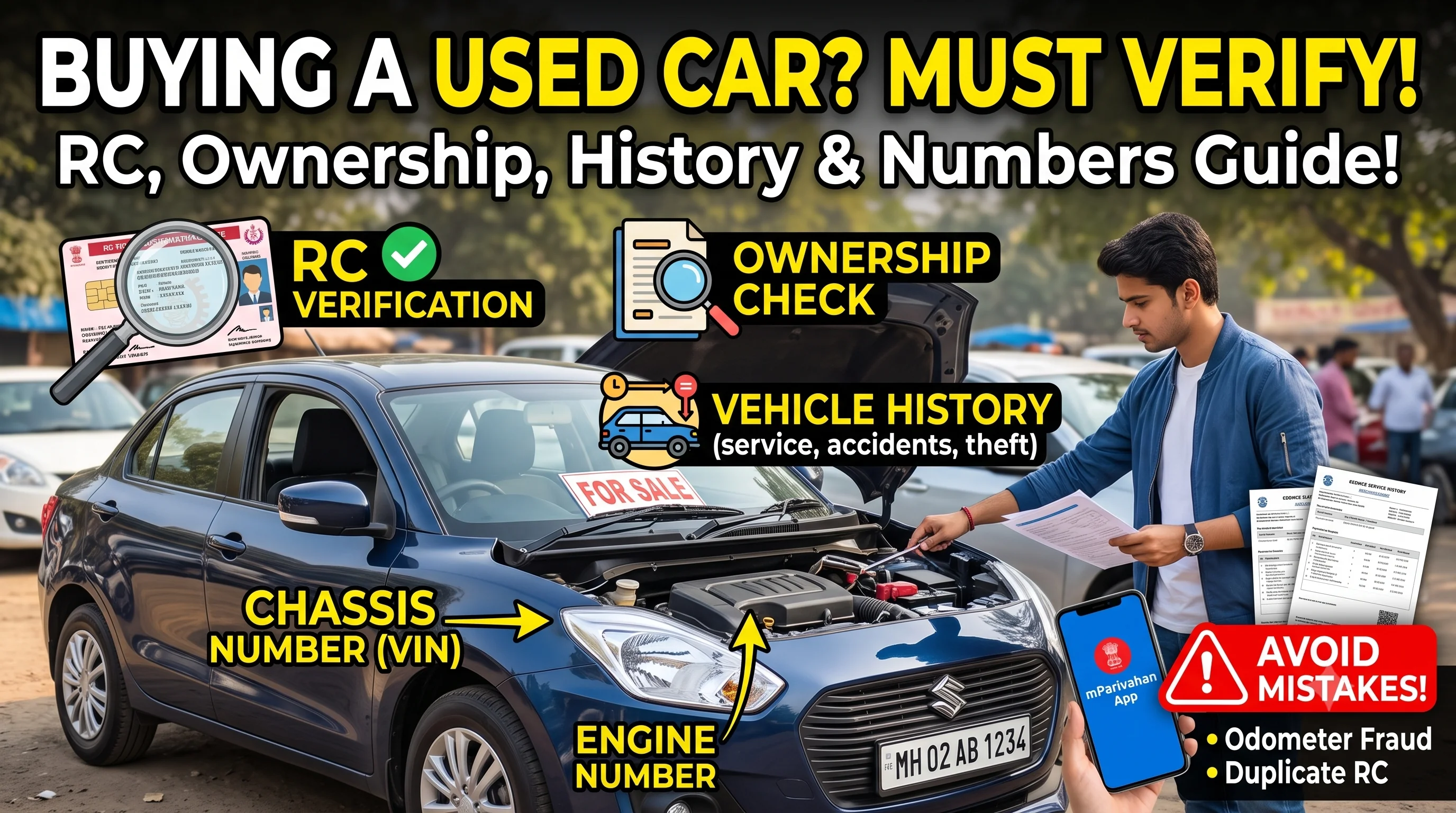
Before buying any used vehicle, always verify its Registration Certificate (RC), engine number, chassis number, insurance details, ownership history, registration status, and supporting documents. Spending a few minutes verifying these details can help you avoid fraud, ownership disputes, and unexpected legal or financial issues.
Introduction
India's used vehicle market is growing rapidly.
Whether you're buying a second-hand motorcycle, scooter, hatchback, sedan, SUV, or commercial vehicle, purchasing without proper verification can become an expensive mistake.
Many buyers focus only on the vehicle's condition or price while ignoring the legal documentation.
As a result, they may unknowingly purchase vehicles with:
- Incorrect ownership details
- Registration issues
- Outstanding legal disputes
- Mismatched engine numbers
- Fake documents
- Registration problems
The good news is that most of these risks can be reduced by following a simple verification process before making the payment.
Why RC Verification Matters
The Registration Certificate is the legal identity of the vehicle.
It confirms:
- Registered Owner
- Registration Number
- Vehicle Category
- Fuel Type
- Engine Number
- Chassis Number
- Registration Date
- Validity
Before purchasing any used vehicle, you should check your RC status online to ensure that the registration details are available and consistent with the information provided by the seller.
Step 1 – Match the Registration Number
The registration number displayed on the vehicle should exactly match the Registration Certificate.
Even a small mismatch deserves clarification before proceeding.
Step 2 – Verify the Engine Number
The engine number printed on the vehicle should match the number recorded in the RC.
Any mismatch could indicate documentation errors or unauthorized modifications.
Step 3 – Verify the Chassis Number
The chassis number is the vehicle's permanent identification number.
Always compare it with the details printed on the Registration Certificate.
Step 4 – Verify Owner Details
Ensure the seller is the registered owner or is legally authorized to sell the vehicle.
If ownership transfer has not yet been completed, understand the implications before making payment.
Step 5 – Check Registration Validity
A valid Registration Certificate is essential.
If the vehicle's registration validity is approaching expiry, ask the seller whether any renewal-related formalities remain pending.
If required in the future, the owner may need to renew the Registration Certificate online according to applicable rules.
Step 6 – Verify Insurance
Insurance should be active and consistent with the vehicle's registration details.
Step 7 – Verify PUC
Confirm whether a valid Pollution Under Control (PUC) certificate is available where required.
Step 8 – Check for Hypothecation
If the vehicle was financed, ensure the loan-related records have been appropriately updated before ownership transfer.
Common Red Flags
- Seller refuses to show original documents.
- Chassis number mismatch.
- Engine number mismatch.
- Incorrect owner name.
- Suspiciously low price.
- Registration information unavailable.
- Damaged Registration Certificate.
If the Registration Certificate has genuinely been lost or damaged, understand the circumstances carefully. A replacement process may be required before completing the purchase.
Expert Tip
Never rely only on photocopies or verbal assurances.
Always compare the physical vehicle with its official registration details.
Whenever possible, verify the registration information independently before making the final payment.
Frequently Asked Questions
It is strongly recommended to verify the Registration Certificate before purchasing any vehicle.
Yes. These details should be consistent with the official registration records.
Yes. Insurance information should be reviewed alongside the Registration Certificate and other supporting documents.
Conclusion
Buying a used vehicle is not only about evaluating its condition or negotiating the best price. Proper verification of the Registration Certificate, engine number, chassis number, ownership details, insurance, and related documents can help you make a more informed decision and reduce the risk of future disputes. Taking the time to verify these details before purchase is a simple step that can save significant time, money, and inconvenience later.