Permanent vs Temporary Vehicle Registration in India: Complete Guide (2026)
Understand the difference between permanent and temporary vehicle registration in India — validity, rules, benefits, process, common mistakes, FAQs, and expert tips.
- Check your vehicle registration details
- Renew your Registration Certificate
- Apply for a replacement Registration Certificate
- Vehicle Registration Certificate (RC) Guide (Blog 1)
Quick Answer
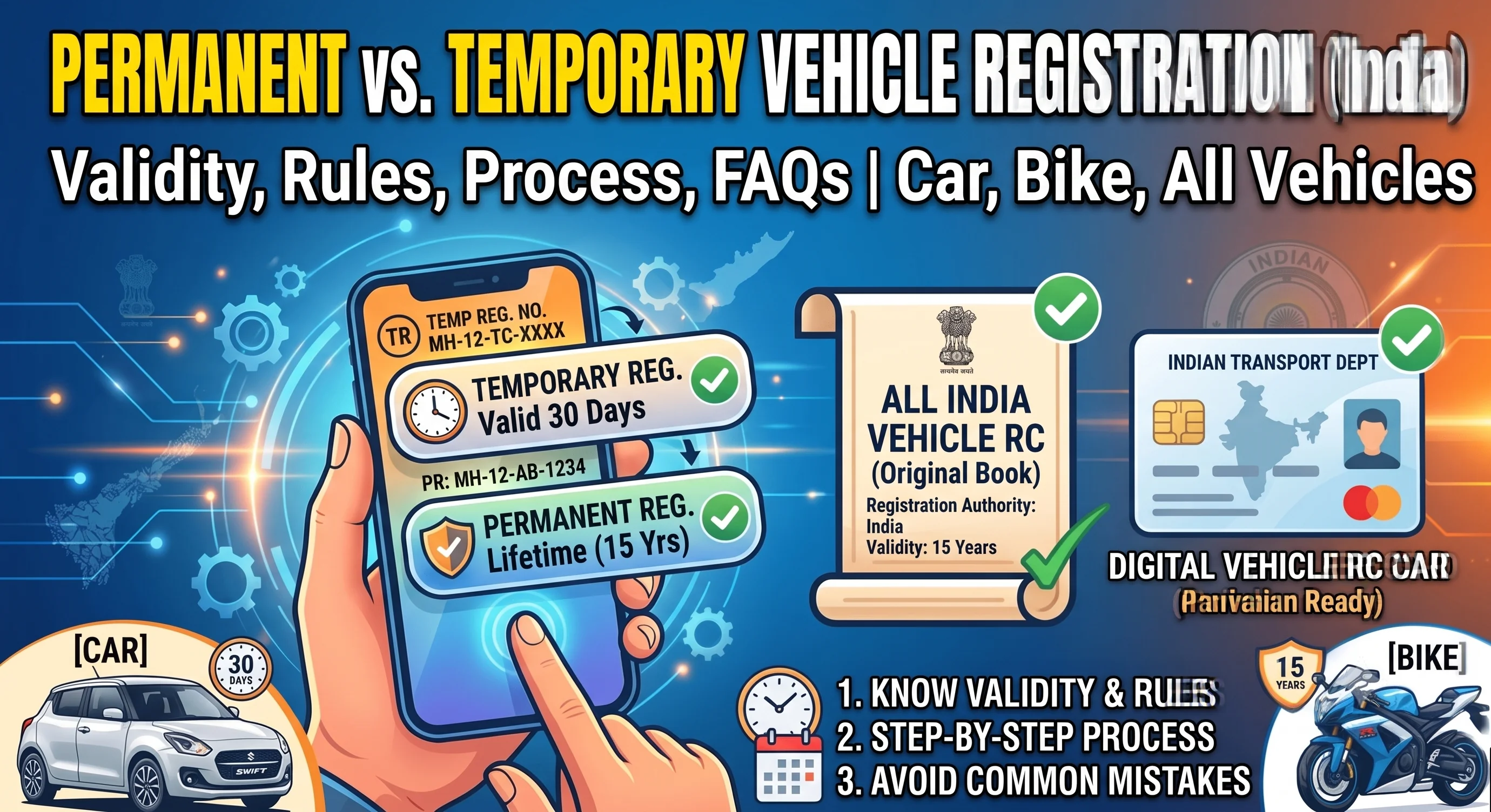
Whenever a new vehicle is purchased in India, it is initially issued a temporary registration number, allowing it to be legally driven for a limited period. Before this temporary registration expires, the vehicle must obtain a permanent registration from the Regional Transport Office (RTO). Permanent registration assigns the vehicle its lifelong registration number and officially records it in the national vehicle database.
What Is Vehicle Registration?
Vehicle registration is a legal process through which a vehicle is officially recorded with the Regional Transport Office (RTO). After successful registration, the vehicle receives a unique registration number and becomes eligible for use on public roads.
Registration helps authorities identify vehicle ownership, verify compliance with applicable regulations, maintain taxation records, and support law enforcement.
Every motor vehicle driven on public roads in India is required to be registered under the applicable provisions of the Motor Vehicles Act.
What Is Temporary Vehicle Registration?
Temporary registration is a short-term registration issued to a newly purchased vehicle before permanent registration is completed.
It allows the owner to legally drive the vehicle for a limited period while completing formal registration procedures.
Most vehicle dealerships arrange temporary registration on behalf of the buyer, enabling the vehicle to be transported from the showroom to the owner's location or the registering authority.
Temporary registration does not replace permanent registration. It serves only as an interim legal authorization.
Why Is Temporary Registration Issued?
Temporary registration exists to bridge the gap between purchasing a vehicle and completing the permanent registration process.
Some common reasons include:
- The vehicle has just been delivered.
- Permanent registration formalities are still in progress.
- Required verification by the RTO is pending.
- Registration tax and documentation are being processed.
- Vehicle inspection has not yet been completed where applicable.
How Long Is Temporary Registration Valid?
Temporary registration is generally issued for a limited validity period, which may vary depending on applicable regulations and specific circumstances.
Vehicle owners should complete the permanent registration process before the temporary registration expires to avoid legal or administrative issues.
What Is Permanent Registration?
Permanent registration is the final registration granted by the RTO after all legal requirements have been fulfilled.
Once approved, the vehicle receives its permanent registration number, and the owner's details become part of the official registration records.
Permanent registration remains associated with the vehicle throughout its lifecycle, although updates may be required if ownership changes, the address changes, or other registration details are modified.
Temporary vs Permanent Registration
| Feature | Temporary Registration | Permanent Registration |
|---|---|---|
| Purpose | Interim authorization | Final legal registration |
| Issued By | Dealer / RTO (as applicable) | Regional Transport Office |
| Validity | Limited period | As per applicable registration validity |
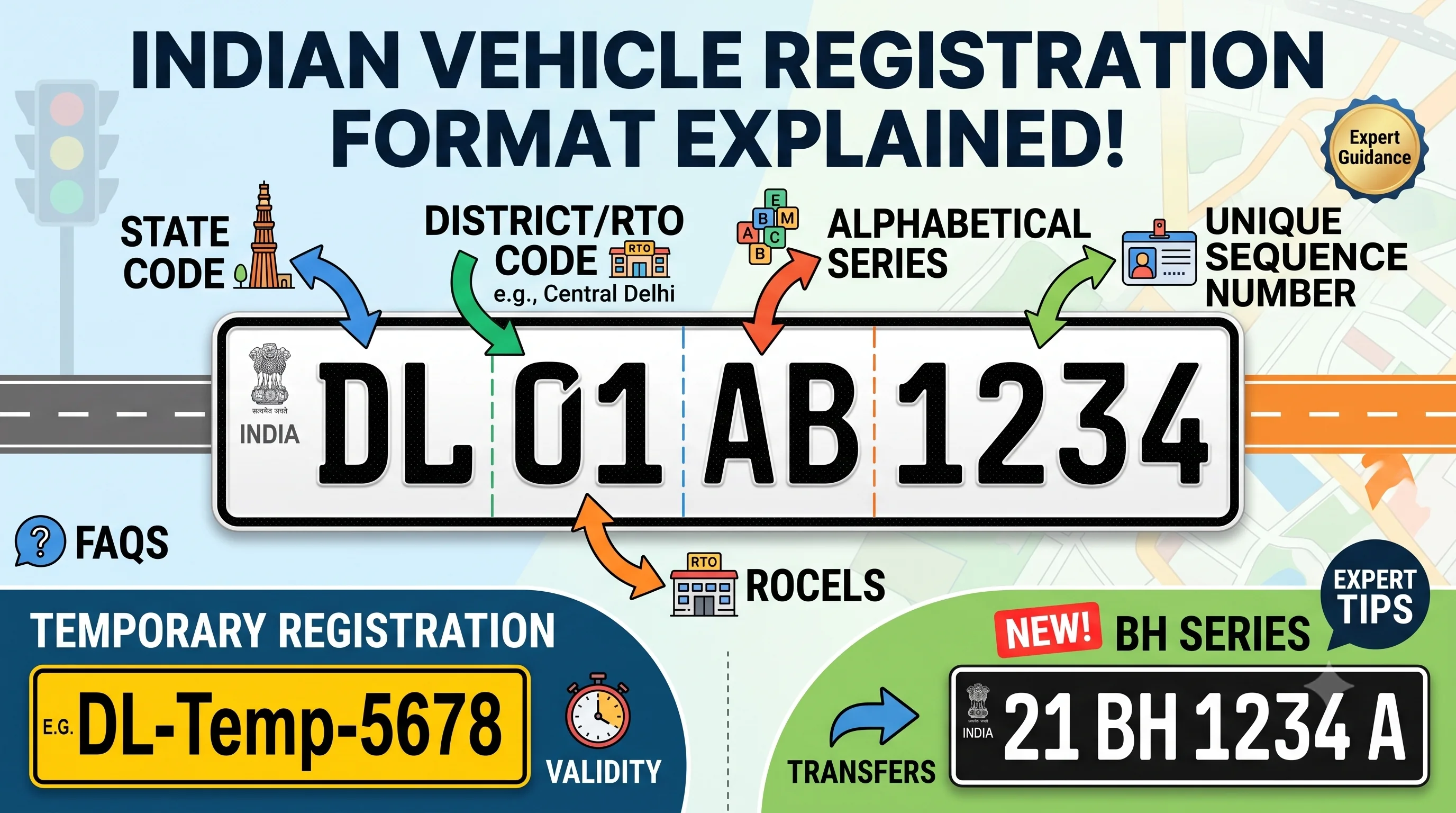
| Registration Number | Temporary number | Permanent registration number |
| Ownership Record | Preliminary | Official government record |
| Required for Long-Term Use | ❌ No | ✅ Yes |
Registration Process Explained
The typical journey from temporary to permanent registration follows a clear sequence after a new vehicle purchase.
Step 1: Purchase and Temporary Registration
After buying the vehicle, temporary registration is usually arranged through the dealership so the vehicle can be driven legally for a limited period.
Step 2: Prepare Documents and Fees
Collect identity proof, address proof, invoice, insurance, tax payment proof, and any forms required by the RTO for permanent registration.
Step 3: Apply for Permanent Registration
Submit the permanent registration application to the concerned RTO, complete verification or inspection where applicable, and pay the required charges.
Step 4: Receive Permanent Registration Number
Once approved, the vehicle is assigned a permanent registration number and recorded in the official vehicle registry.
Step 5: Collect / Access Your RC
After issuance, you can access your Registration Certificate through supported official services and keep both physical and digital copies organized.
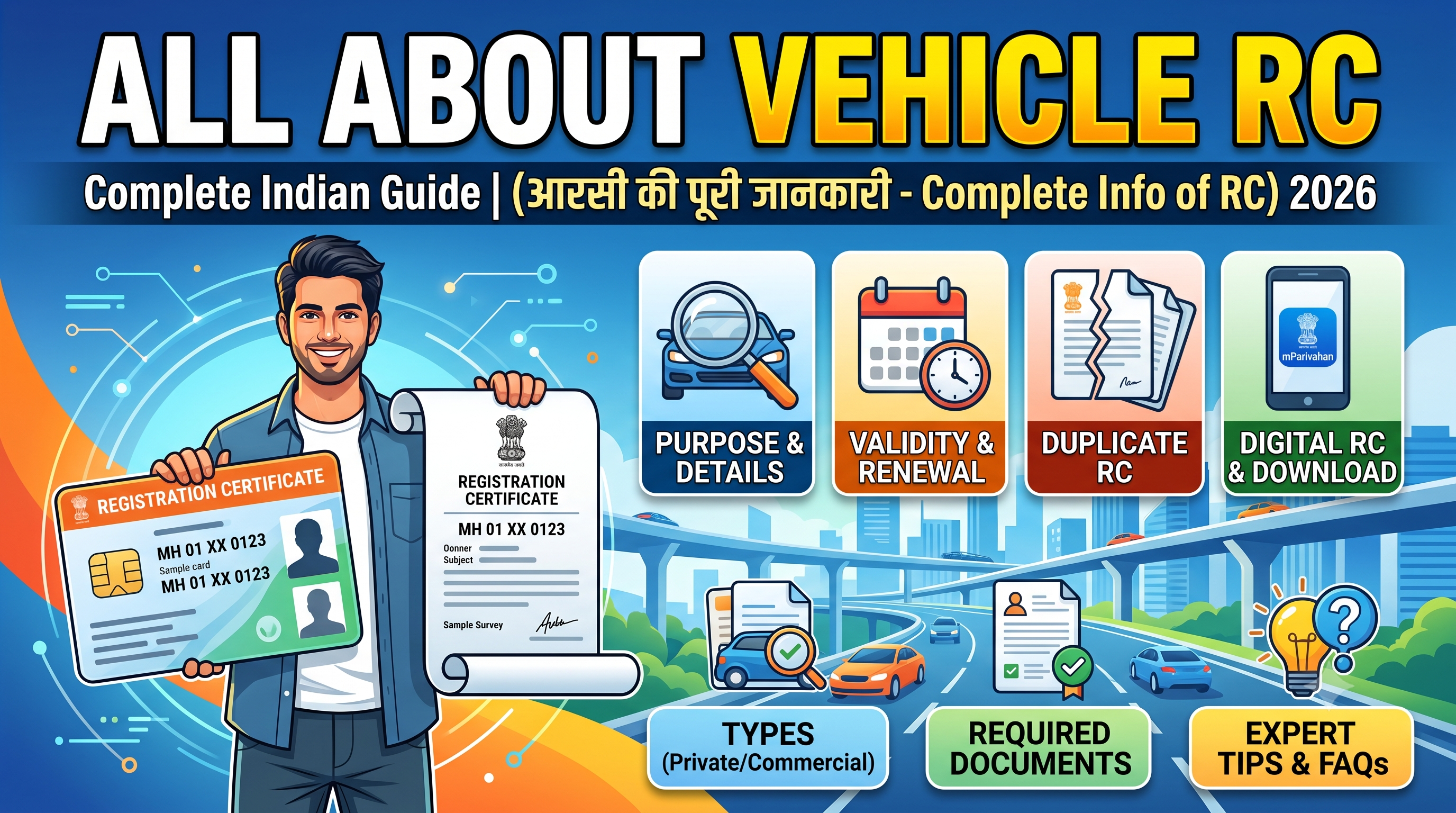
You can later check your vehicle registration details, renew your Registration Certificate, or apply for a replacement Registration Certificate when needed.
Documents Commonly Required
Depending on the state and vehicle category, the following documents are generally required for permanent registration:
- Proof of identity
- Proof of address
- Vehicle purchase invoice
- Insurance certificate
- Pollution Under Control (PUC), where applicable
- Road tax payment proof
- Form(s) prescribed by the RTO
- Temporary registration details (if issued)
Requirements may vary by state or vehicle type.
Common Mistakes to Avoid
- Delaying permanent registration after vehicle purchase.
- Assuming temporary registration is sufficient for long-term use.
- Providing incorrect owner or vehicle details.
- Missing required documentation during registration.
- Ignoring applicable state-specific procedures.
Expert Tip
Before purchasing a vehicle, confirm with the dealership whether they will handle the permanent registration process or whether you need to complete any additional formalities with your local RTO. Keeping copies of all submitted documents can also make future services—such as checking registration details, replacing an RC, or renewing registration—much easier.
Suggested Related Articles
Frequently Asked Questions
Temporary registration is a short-term authorization issued after purchase so you can legally drive the vehicle until permanent registration is completed. Permanent registration is the final RTO registration that assigns the lifelong registration number and official ownership record.
No. Temporary registration is only an interim authorization. You must complete permanent registration before the temporary registration expires for long-term legal use on public roads.
Temporary registration is commonly arranged by the vehicle dealership on behalf of the buyer, though it may also involve RTO procedures depending on local rules and circumstances.
Temporary registration is issued for a limited validity period. Exact duration can vary based on applicable regulations and specific circumstances, so complete permanent registration before expiry.
Once approved, the vehicle receives its permanent registration number and the owner's details are recorded in official registration records. The vehicle is then fully registered for long-term use subject to applicable renewal and update rules.
Common requirements include identity proof, address proof, purchase invoice, insurance certificate, PUC where applicable, road tax proof, prescribed RTO forms, and temporary registration details if issued. Requirements may vary by state or vehicle type.
Temporary registration authorizes limited short-term use; it does not replace permanent registration or the Registration Certificate issued after permanent registration is completed.
Confirm whether the dealership will handle the permanent registration process or whether you need to complete additional formalities with your local RTO, and keep copies of all submitted documents for future services.