How to Transfer Vehicle Ownership in India: Complete RC Transfer Guide (2026)
Learn how vehicle ownership transfer works in India, why updating your Registration Certificate is important, common mistakes to avoid, required documents, and frequently asked questions.
- check your RC status online
- How to Verify a Used Vehicle Before Buying (Blog 8)
- apply for a Duplicate RC online
- renew the Registration Certificate online
Quick Answer
Buying or selling a vehicle is more than just handing over the keys and receiving payment. One of the most important steps is updating the Registration Certificate (RC) so that the official records accurately identify the current owner. Proper ownership transfer protects both the buyer and the seller by ensuring that future notices, penalties, and legal responsibilities are associated with the correct person.
Introduction
Buying or selling a vehicle is more than just handing over the keys and receiving payment.
One of the most important steps is updating the Registration Certificate (RC) so that the official records accurately identify the current owner.
Many people believe that a signed sale agreement alone completes the transaction. However, until the ownership details recorded with the Regional Transport Office (RTO) are updated, the previous owner may still appear in the official registration records.
Proper ownership transfer protects both the buyer and the seller by ensuring that future notices, penalties, and legal responsibilities are associated with the correct person.
Why Vehicle Ownership Transfer Is Important
The Registration Certificate is the official document that links a vehicle to its registered owner.
If ownership is not updated after a sale or transfer:
- Traffic notices may continue reaching the previous owner.
- Insurance-related issues may arise.
- Future vehicle transactions may become more complicated.
- Loan, tax, or legal records may not accurately reflect the current owner.
Keeping the RC updated helps maintain accurate government records and simplifies future vehicle-related services.
Situations Where Ownership Transfer Is Required
Ownership transfer may be necessary in situations such as:
- Sale of a used car or motorcycle.
- Purchase of a second-hand vehicle.
- Transfer within the family where applicable.
- Inheritance or succession.
- Auction purchases.
- Court-directed ownership changes.
The applicable process may vary depending on the specific situation and state regulations.
Verify the RC Before Buying a Used Vehicle
Before purchasing any second-hand vehicle, always verify the Registration Certificate and ensure that the seller is the registered owner.
A simple precaution is to check your RC status online to confirm that the registration details are available and consistent with the information provided by the seller.
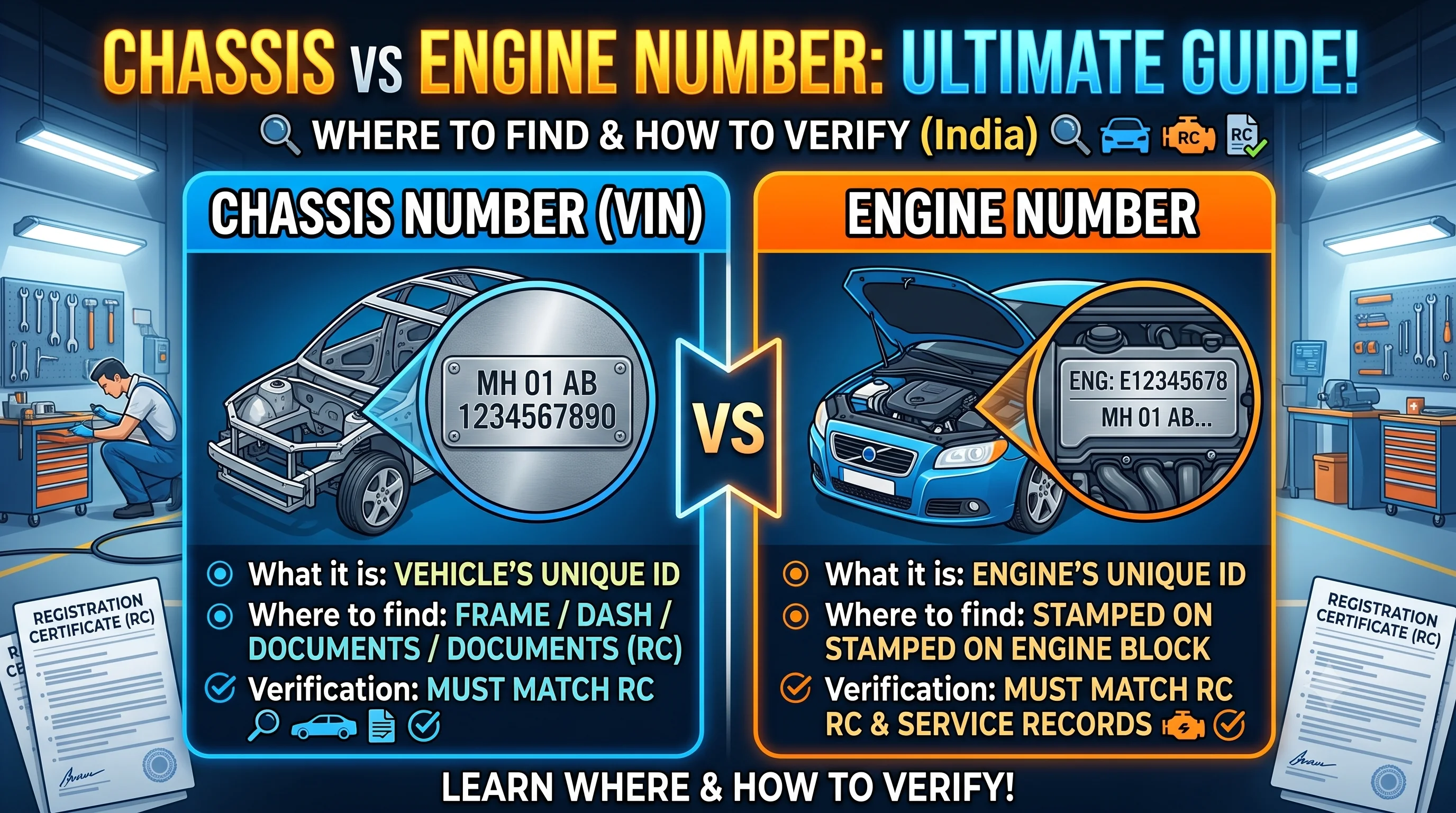
You should also compare the vehicle's registration number, engine number, and chassis number with the information recorded in the RC.
For a more detailed checklist, refer to our How to Verify a Used Vehicle Before Buying guide.
Documents Commonly Required
Although requirements vary by state and the nature of the transfer, the following documents are commonly requested:
- Original Registration Certificate (RC)
- Identity proof
- Address proof
- Vehicle insurance certificate
- Pollution Under Control (PUC) certificate, where applicable
- Applicable transfer forms
- Sale agreement or supporting ownership documents
- Financier's consent, if the vehicle is under hypothecation
Always verify the latest document requirements with the concerned transport authority.
What If the Original RC Is Missing?
If the original Registration Certificate has been lost or is badly damaged, ownership transfer may become more complicated because the official document is unavailable.
In such situations, it may first be necessary to apply for a Duplicate RC online before proceeding with the ownership transfer process.
Replacing the missing RC helps ensure that the vehicle's documentation is complete before ownership records are updated.
Common Mistakes During Ownership Transfer
Many ownership transfer delays happen because of avoidable errors, including:
- Purchasing a vehicle without verifying the RC.
- Failing to update ownership after completing the sale.
- Not checking whether the vehicle is under hypothecation.
- Submitting incomplete documentation.
- Ignoring state-specific requirements.
Taking time to verify the documents before initiating the transfer can save considerable effort later.
What Happens After the Transfer?
Once the ownership transfer is successfully completed, the Registration Certificate is updated to reflect the new owner's information.
The new owner should review the updated RC carefully and ensure that all details are accurate.
It is also advisable to monitor the registration record periodically by checking the latest status online whenever needed.
Does Ownership Transfer Affect RC Renewal?
Ownership transfer and RC renewal are different processes, but both relate to the Registration Certificate.
If the vehicle's registration validity is nearing expiry, the new owner should also ensure that they renew the Registration Certificate online within the applicable timeline.
Expert Tips
- Never make full payment without verifying the RC.
- Compare the seller's identity with the registered owner's details.
- Keep copies of all transfer-related documents.
- Confirm that any financing obligations have been cleared before finalizing the purchase.
- Review the updated Registration Certificate after the transfer is completed.
Frequently Asked Questions
No. A sale agreement documents the transaction, but the Registration Certificate should also be updated through the appropriate process.
A missing RC can complicate the transfer. Obtaining a replacement Registration Certificate is generally advisable before completing the ownership change.
Yes. Verifying the RC and ensuring that the seller is the registered owner can help reduce the risk of future disputes.
The applicable legal requirements depend on the status of the ownership transfer and the documents available. Always comply with the relevant transport regulations.
Conclusion
Vehicle ownership transfer is an essential part of buying or selling a vehicle. Updating the Registration Certificate ensures that government records accurately reflect the current owner and helps avoid future legal, insurance, and administrative issues. Before completing any transaction, verify the Registration Certificate, review all supporting documents, and ensure that the ownership change is properly recorded.