Vehicle Chassis Number vs Engine Number: What's the Difference and Why Does It Matter? (2026)
Learn the difference between a vehicle chassis number and engine number, where to find them, why they matter, and how to verify them before buying or selling a vehicle.
- check your RC status online
- How to Verify a Used Vehicle Before Buying (Blog 8)
- apply for a Duplicate RC online
Quick Answer
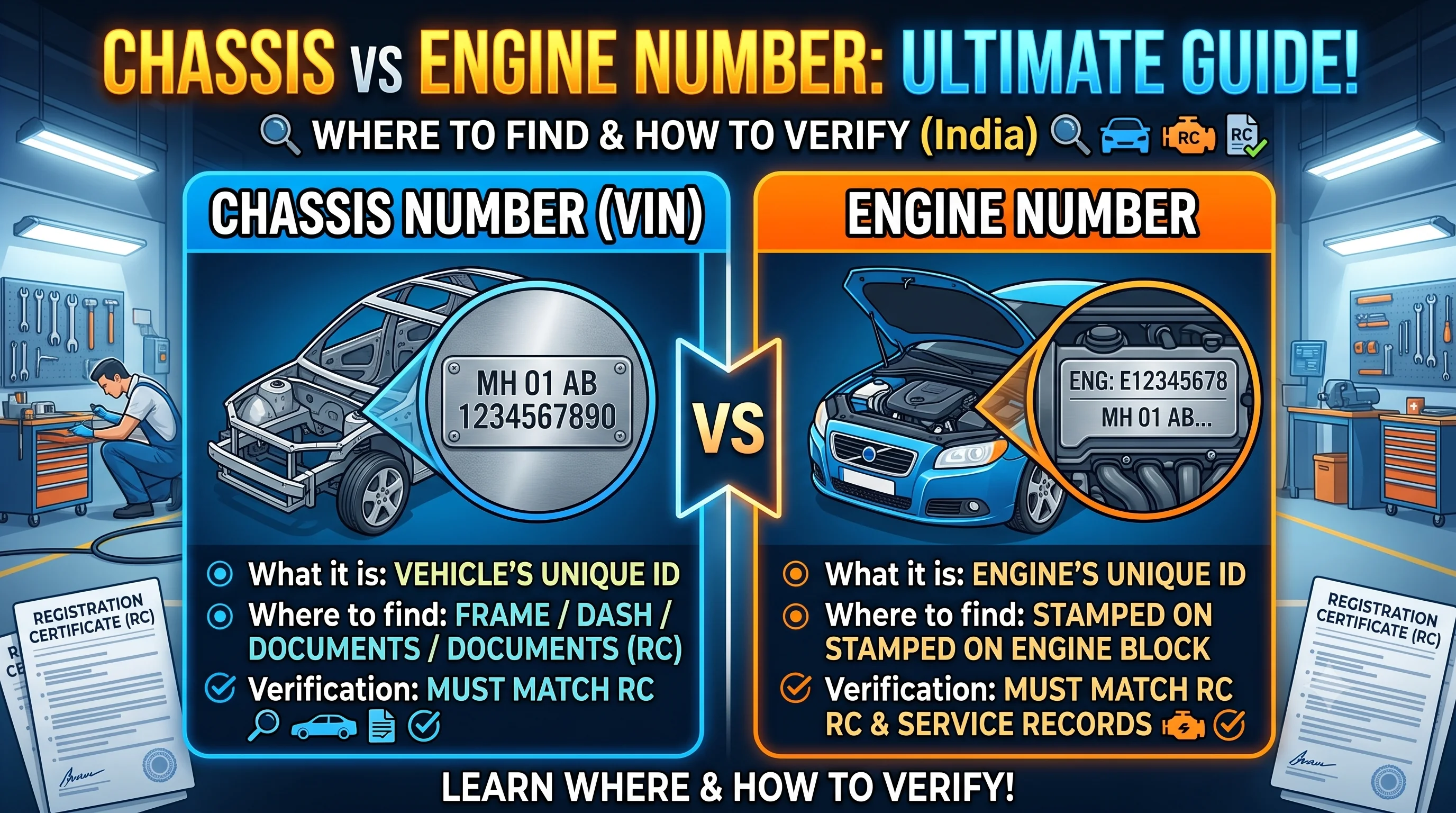
A chassis number identifies the vehicle itself, while an engine number identifies the engine installed in that vehicle. Both numbers are recorded on the Registration Certificate (RC) and are essential for vehicle registration, insurance, ownership verification, and resale.
Introduction
When purchasing, selling, insuring, or registering a vehicle, you'll often hear two terms:
- Chassis Number
- Engine Number
Many vehicle owners think they're the same.
They're not.
These two identification numbers serve different purposes and play a critical role throughout the life of a vehicle.
Understanding their differences can help you avoid documentation errors, identify fraudulent modifications, and verify that the vehicle matches its official registration records.
What Is a Chassis Number?
The chassis number is the unique identification number assigned to the vehicle's frame by the manufacturer.
It remains associated with the vehicle throughout its lifetime and is commonly used as the primary identification reference.
This number is also reflected in the Registration Certificate.
When buying a used vehicle, always compare the chassis number stamped on the vehicle with the details recorded in the Registration Certificate. If you are unsure whether the registration information is current, first check your RC status online before completing the purchase.
What Is an Engine Number?
The engine number is a unique number assigned specifically to the engine fitted in the vehicle.
Unlike the chassis number, it identifies the engine rather than the vehicle body.
It is important during:
- Insurance verification
- Registration
- Ownership transfer
- Accident investigation
- Vehicle servicing
Chassis Number vs Engine Number
| Feature | Chassis Number | Engine Number |
|---|---|---|
| Identifies | Vehicle | Engine |
| Assigned By | Manufacturer | Manufacturer |
| Mentioned in RC | ✅ Yes | ✅ Yes |
| Used for Registration | ✅ Yes | ✅ Yes |
| Used for Insurance | ✅ Yes | ✅ Yes |
| Used During Ownership Transfer | ✅ Yes | ✅ Yes |
Where Can You Find These Numbers?
Most manufacturers stamp the chassis number on the vehicle frame or body structure, while the engine number is usually engraved directly on the engine block.
Their exact locations vary depending on the manufacturer and model.
The same numbers should also match the information recorded on your Registration Certificate.
Why Do These Numbers Matter?
These identification numbers help:
- Confirm that the vehicle matches its official records.
- Detect possible tampering or fraud.
- Verify ownership during resale.
- Support insurance claims.
- Assist authorities in identifying stolen vehicles.
Buying a Used Vehicle? Check These First
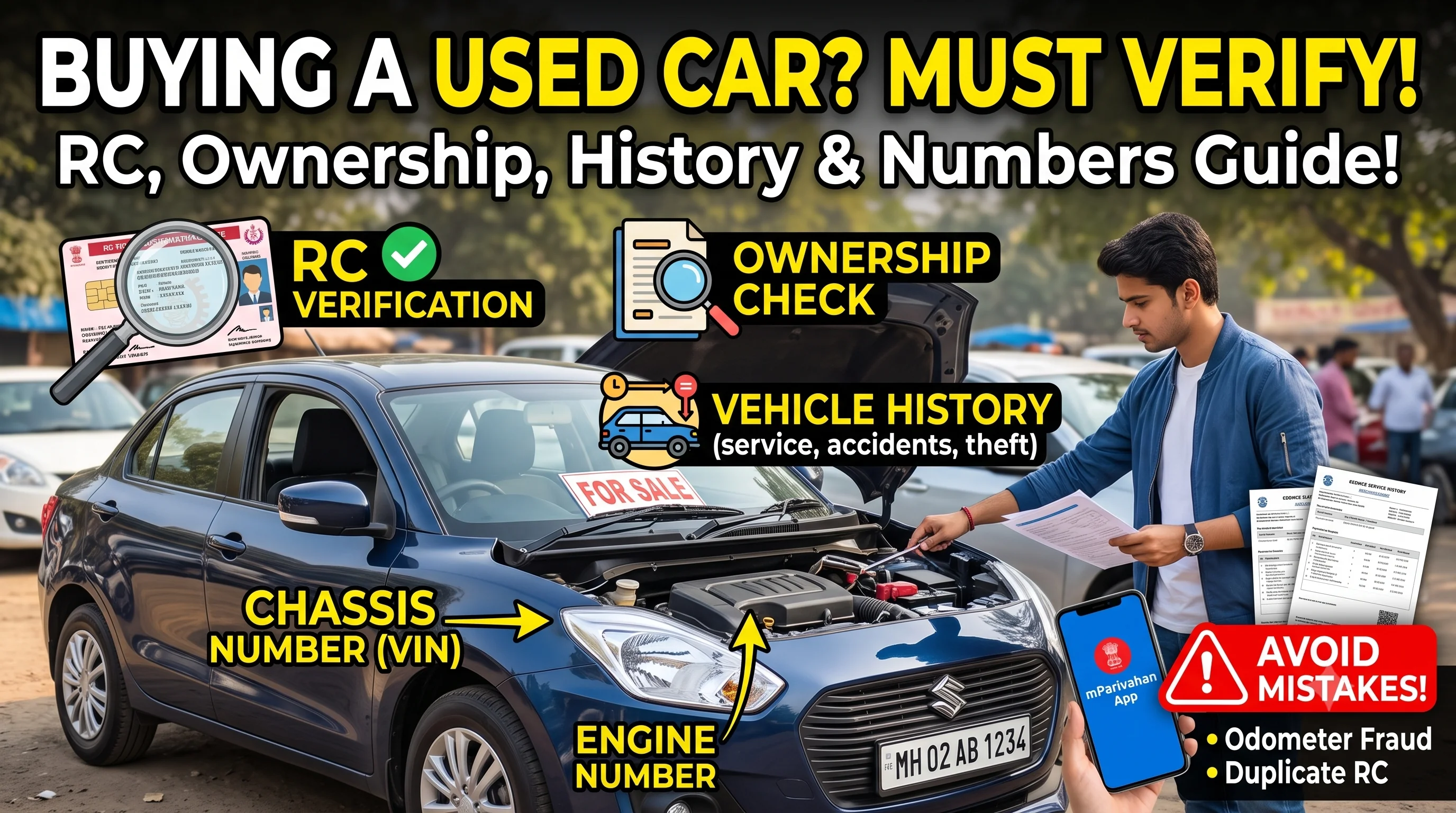
Before making payment for a second-hand vehicle:
- Compare the chassis number on the vehicle with the RC.
- Verify the engine number.
- Match the registration number.
- Review insurance documents.
Read our How to Verify a Used Vehicle Before Buying guide for a complete checklist.
What If the Numbers Don't Match?
A mismatch between the numbers printed on the Registration Certificate and those physically present on the vehicle should never be ignored.
Possible reasons include:
- Documentation errors
- Unauthorized modifications
- Incorrect data entry
- Fraudulent activity
Such discrepancies should be clarified before purchasing, selling, or transferring ownership.
What If Your RC Is Lost?
If your Registration Certificate is unavailable, damaged, or unreadable, obtaining a replacement can help you verify important details such as the engine and chassis numbers.
When appropriate, you may need to apply for a Duplicate RC online before proceeding with ownership-related processes.
Common Mistakes
- Assuming the chassis number and engine number are identical.
- Ignoring mismatches during vehicle purchase.
- Relying only on photocopies of documents.
- Not verifying registration records before buying a used vehicle.
Expert Tip
Whenever you inspect a used vehicle, compare the engine number, chassis number, and registration details together. Looking at only one document is rarely enough to verify the authenticity of the vehicle.
Frequently Asked Questions
In many cases, the chassis number forms part of the Vehicle Identification Number (VIN), but terminology and formats may vary by manufacturer.
Engine replacement may affect the engine number. Any such changes should be handled according to the applicable legal procedures.
They help uniquely identify the registered vehicle and support verification during legal, insurance, and ownership-related processes.
Related Articles
External References
- Parivahan Portal
- VAHAN Services
- Vehicle Manufacturer Documentation (where applicable)
Conclusion
The chassis number and engine number are two of the most important identifiers associated with a vehicle. Although they serve different purposes, both play a key role in registration, insurance, resale, and legal verification. Understanding the difference—and verifying both against the Registration Certificate—can help vehicle owners avoid costly mistakes and ensure that all records remain accurate.