Pollution Under Control (PUC) Certificate: Why Every Vehicle Owner Needs It (2026)
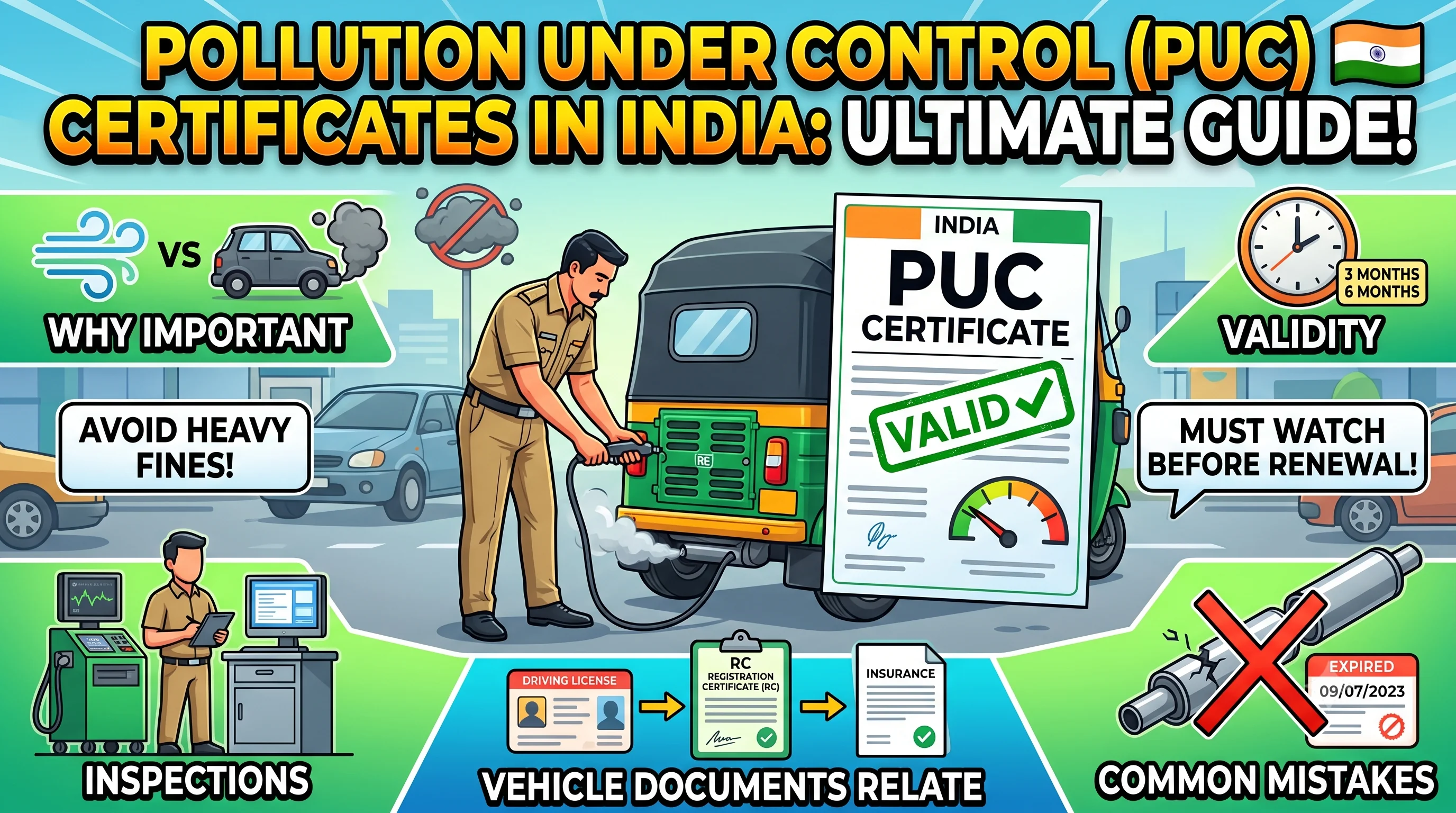
Learn everything about Pollution Under Control (PUC) Certificates in India, including why they are important, validity, inspections, common mistakes, and how they relate to your vehicle documents.
- check your RC status online
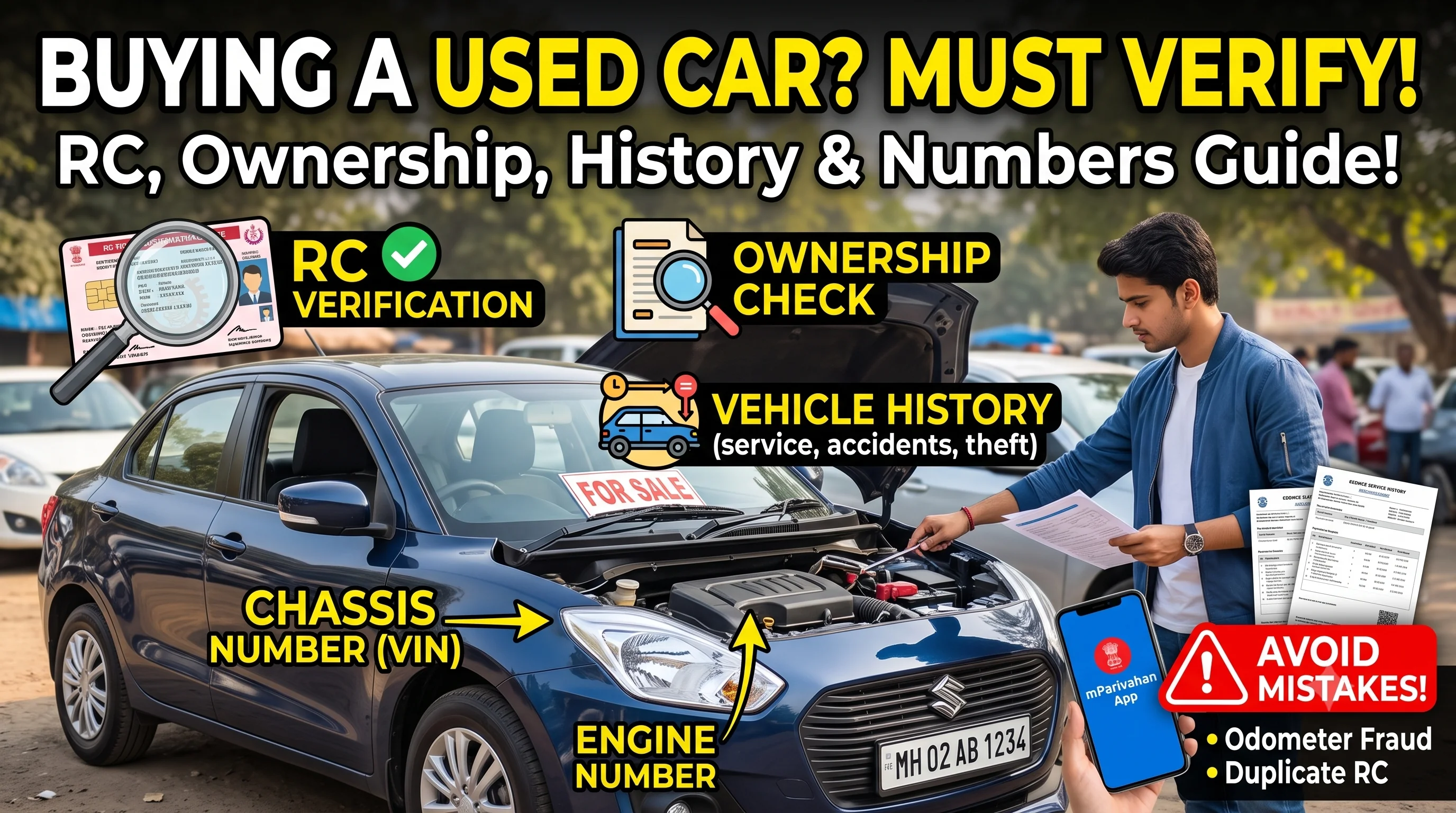
- Used Vehicle Verification Guide (Blog 8)
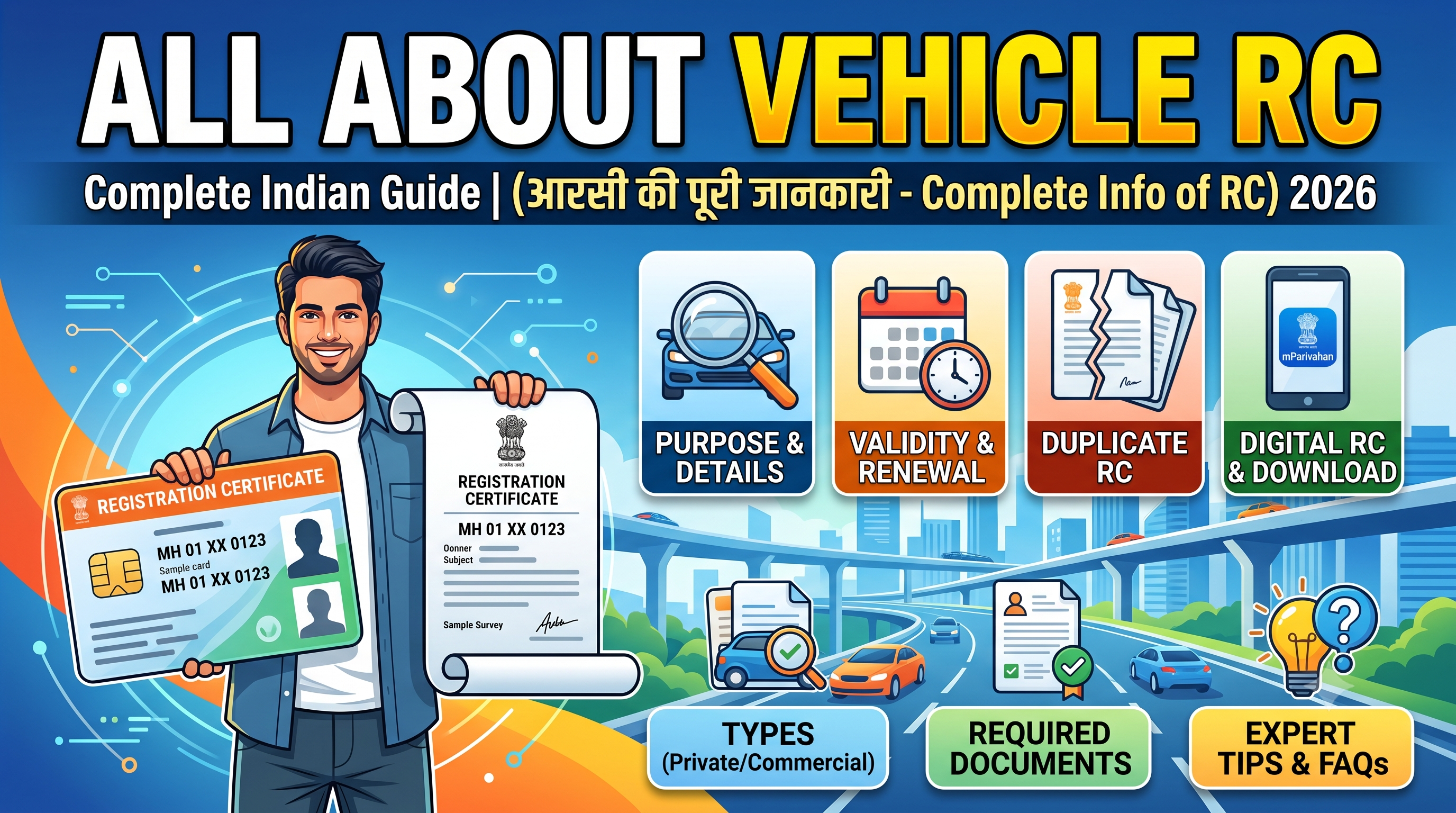
- Vehicle Registration Certificate Guide (Blog 1)
Quick Answer
A Pollution Under Control (PUC) Certificate is an official document issued after a vehicle's emissions are tested and found to be within the permissible limits prescribed under applicable regulations. Along with your Registration Certificate, insurance policy, and driving licence, it forms an important part of your vehicle documentation.
Introduction
Owning a vehicle comes with responsibilities that go beyond registration and insurance.
One of the most overlooked documents is the Pollution Under Control (PUC) Certificate.
Many vehicle owners remember it only when stopped during a document inspection or while renewing other vehicle-related paperwork.
However, maintaining a valid PUC Certificate helps demonstrate that your vehicle meets the applicable emission standards and contributes to cleaner air.
What Is a PUC Certificate?
A Pollution Under Control Certificate confirms that your vehicle has successfully passed an emission test conducted at an authorized testing centre.
The certificate generally includes:
- Vehicle Registration Number
- Date of Testing
- Emission Values
- Fuel Type
- Validity Period
- Testing Centre Details
The exact format may vary depending on the state and testing authority.
Why Is a PUC Certificate Important?
A valid PUC Certificate supports responsible vehicle ownership by showing that your vehicle's emissions remain within the permitted limits.
It also complements your other essential vehicle documents.
For example, before buying a used vehicle, it is a good practice to verify not only the Registration Certificate but also the availability of a valid PUC Certificate.
You should first check your RC status online to confirm that the registration details are correct and then review the supporting documents provided by the seller.
How Is a PUC Certificate Different from an RC?
Many vehicle owners confuse these two documents.
| Registration Certificate (RC) | PUC Certificate |
|---|---|
| Confirms vehicle registration | Confirms emission compliance |
| Issued by the RTO | Issued by an authorized emission testing centre |
| Records ownership and vehicle details | Records emission test results |
| Required throughout vehicle ownership | Requires periodic renewal based on applicable validity |
Although they serve different purposes, both are important parts of your vehicle documentation.
When Should You Carry a PUC Certificate?
A valid PUC Certificate should be kept along with other important vehicle documents such as:
- Registration Certificate (RC)
- Driving Licence
- Insurance Policy
Maintaining all these documents together can make routine inspections and verification easier.
Buying a Used Vehicle?
Before purchasing a used vehicle:
- Verify the Registration Certificate.
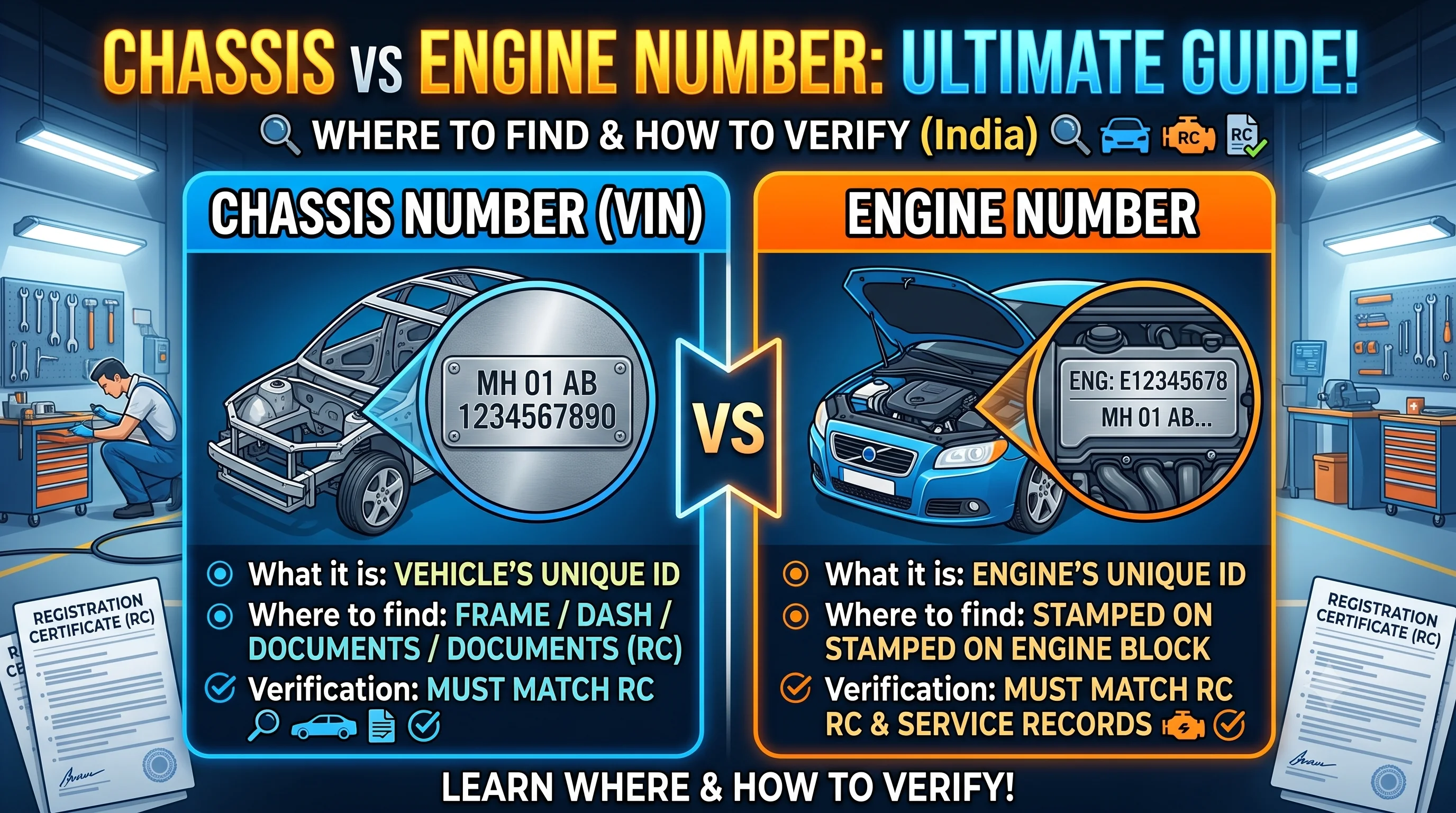
- Compare the engine and chassis numbers.
- Check the insurance policy.
- Review the latest PUC Certificate.
This provides a more complete picture of the vehicle's documentation.
Common Mistakes
- Forgetting to renew the PUC Certificate.
- Misplacing the certificate.
- Ignoring unusually high emission readings.
- Purchasing a used vehicle without reviewing its PUC history.
- Assuming insurance alone is sufficient.
Expert Tip
Keep all important vehicle documents in one organized folder—physical or digital. This makes it much easier to manage renewals, ownership transfers, inspections, and other vehicle-related services.
Frequently Asked Questions
No. The RC confirms vehicle registration, while the PUC Certificate confirms that the vehicle meets applicable emission standards.
Yes. Reviewing the PUC Certificate along with the Registration Certificate can help you better understand the vehicle's condition and documentation.
No. It is a separate document with a different purpose.
Related Articles
Conclusion
A Pollution Under Control Certificate is an important part of responsible vehicle ownership. While it serves a different purpose from the Registration Certificate, both documents work together to support legal compliance and proper vehicle documentation. Keeping your PUC Certificate updated, along with your RC and insurance records, can help avoid unnecessary complications during inspections or future vehicle transactions.