Vehicle Registration Certificate (RC) vs Vehicle Insurance: What's the Difference? (Complete Comparison Guide 2026)
Confused between a Registration Certificate (RC) and vehicle insurance? Learn the key differences, why both are important, common misconceptions, and practical examples for Indian vehicle owners.
- check your RC status online
- renew your Registration Certificate online
- Vehicle Ownership Transfer Guide (Blog 11)
Quick Answer
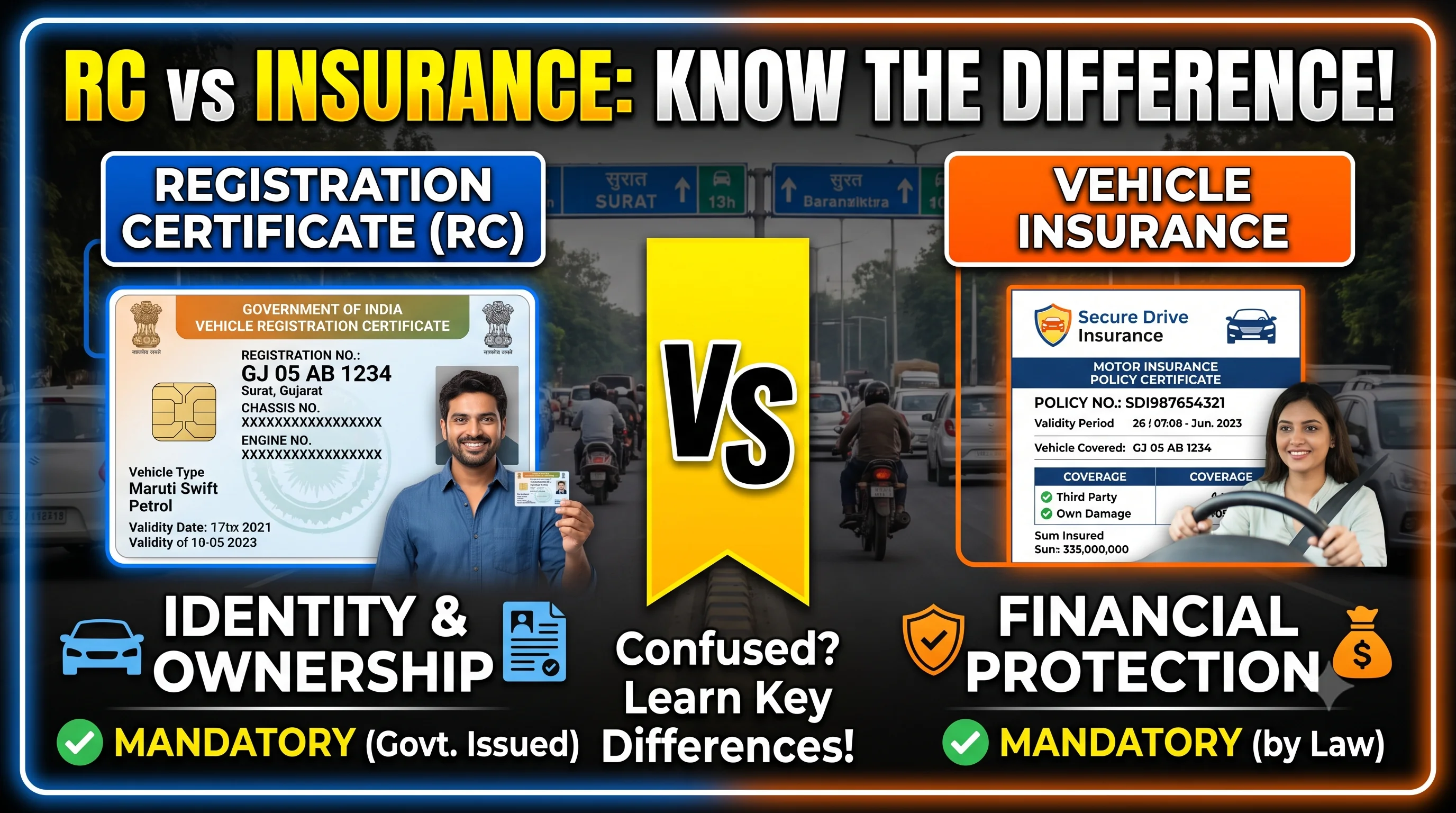
A Registration Certificate (RC) proves that a vehicle is legally registered with the Regional Transport Office (RTO), whereas vehicle insurance provides financial protection against accidents, damage, theft, or third-party liabilities. These documents serve completely different purposes, and every vehicle owner should maintain both according to the applicable legal requirements.
Introduction
One of the most common questions asked by new vehicle owners is:
"If I already have insurance, do I still need an RC?"
Or,
"Is the Registration Certificate the same as insurance?"
The answer is No.
Although both are essential vehicle documents, they perform very different functions.
Confusing one with the other can lead to documentation issues, difficulties during ownership transfer, insurance claims, or regulatory inspections.
This guide explains the difference between the Registration Certificate and vehicle insurance in simple language so that every vehicle owner can understand why both are important.
What Is a Registration Certificate?
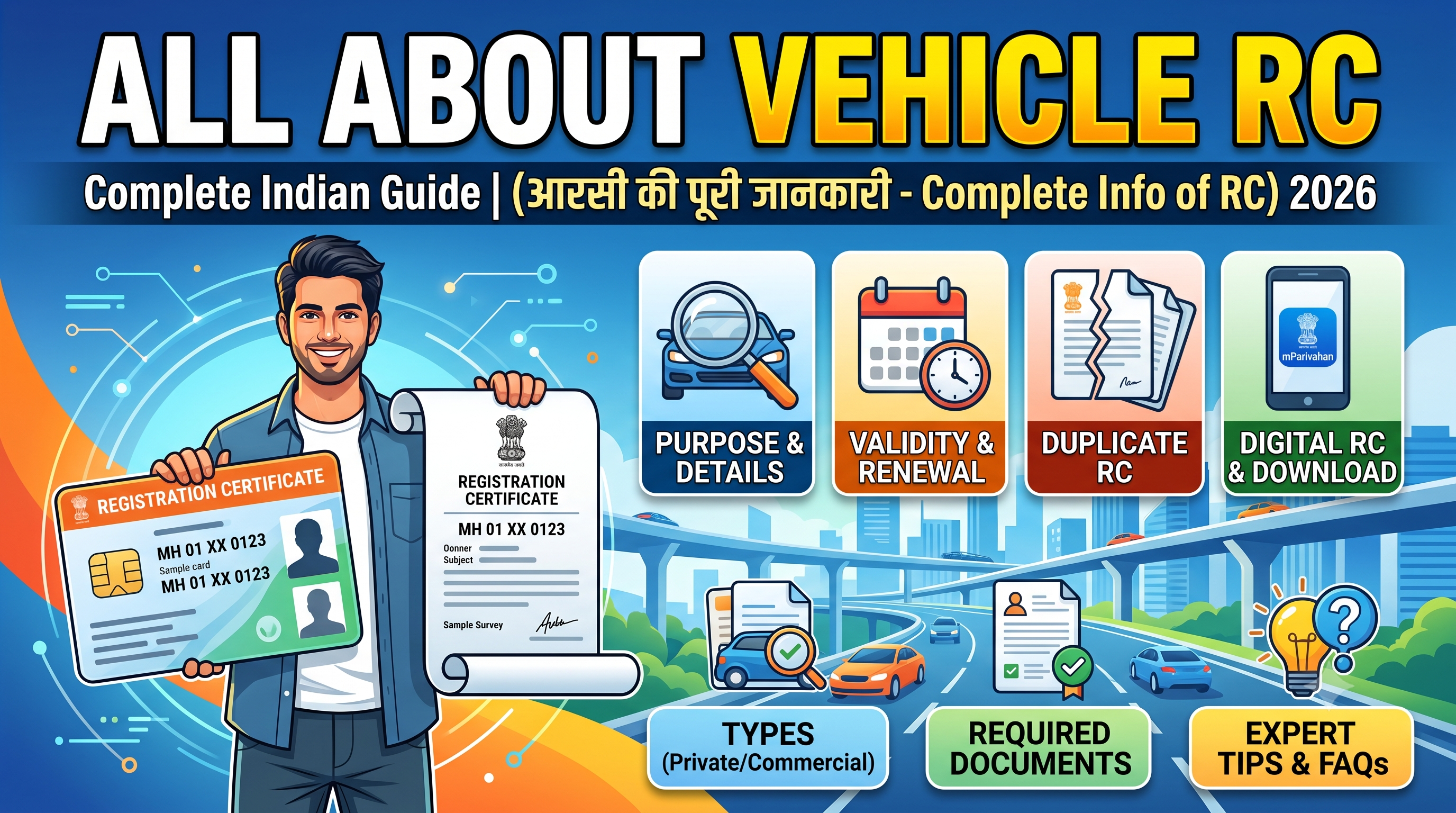
A Registration Certificate is an official government document issued after a vehicle is registered.
It identifies:
- The registered owner
- Registration number
- Vehicle category
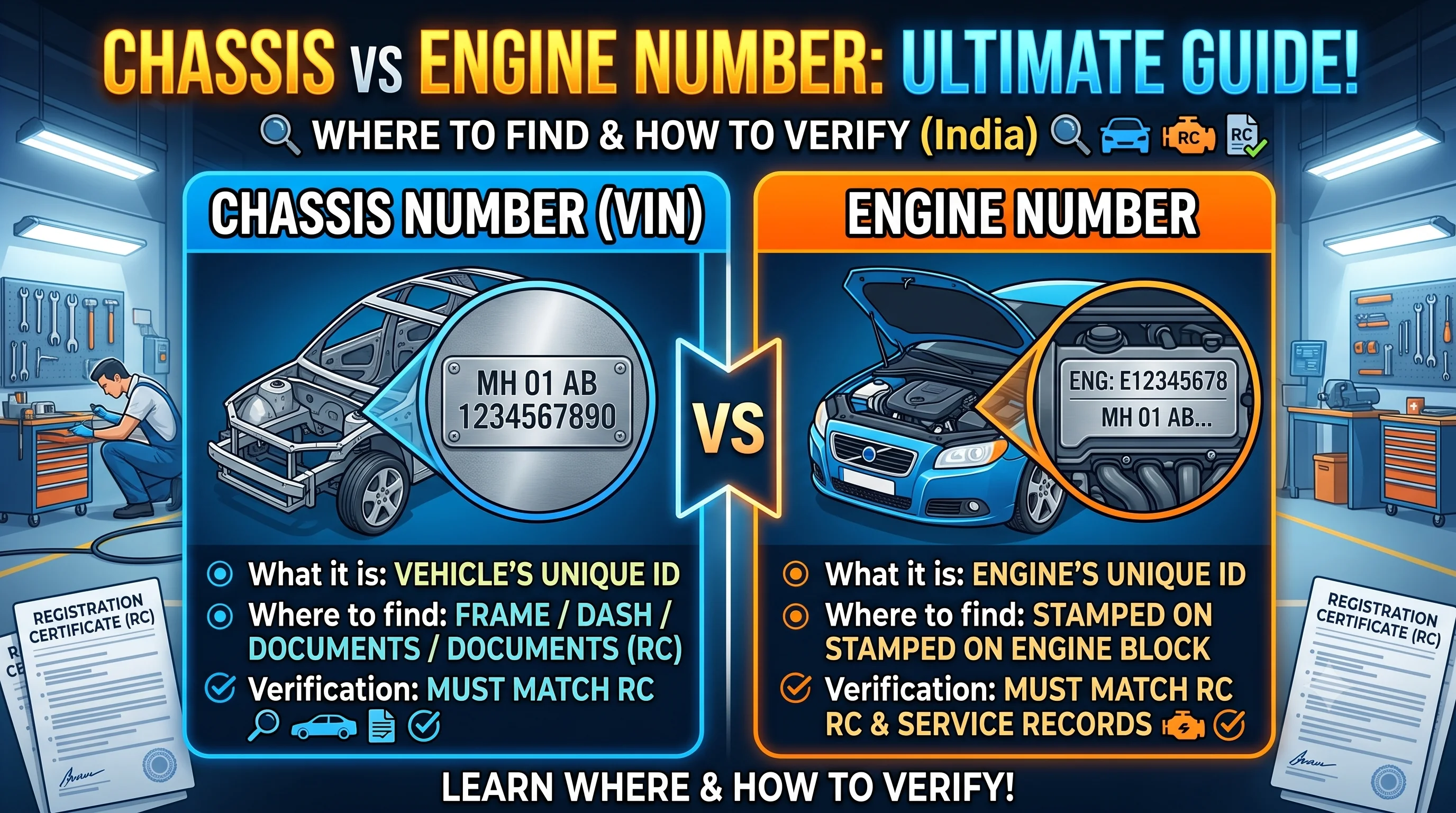
- Engine number
- Chassis number
- Fuel type
- Registration validity
- Other registration-related information
If you are unsure whether your registration details have been updated correctly, it is always a good idea to check your RC status online before initiating any further registration-related process.
What Is Vehicle Insurance?
Vehicle insurance is a contract between the vehicle owner and an insurance company.
Depending on the type of policy, insurance may provide financial coverage for:
- Third-party liabilities
- Accidental damage
- Theft
- Fire
- Natural disasters
- Personal accident benefits (where applicable)
Insurance protects against financial risk, whereas the RC establishes legal ownership and registration.
RC vs Vehicle Insurance
| Registration Certificate (RC) | Vehicle Insurance |
|---|---|
| Issued by the RTO | Issued by an insurance company |
| Confirms legal registration | Provides financial protection |
| Contains vehicle and owner details | Contains policy and coverage details |
| Required for registration-related services | Required for insurance claims |
| Updated after ownership transfer | May also require policy transfer after ownership changes |
Why You Need Both
A common misconception is that one document replaces the other.
In reality:
- The RC proves that the vehicle is legally registered.
- Insurance helps protect you from financial losses associated with covered incidents.
Maintaining both documents ensures that your vehicle records remain complete.
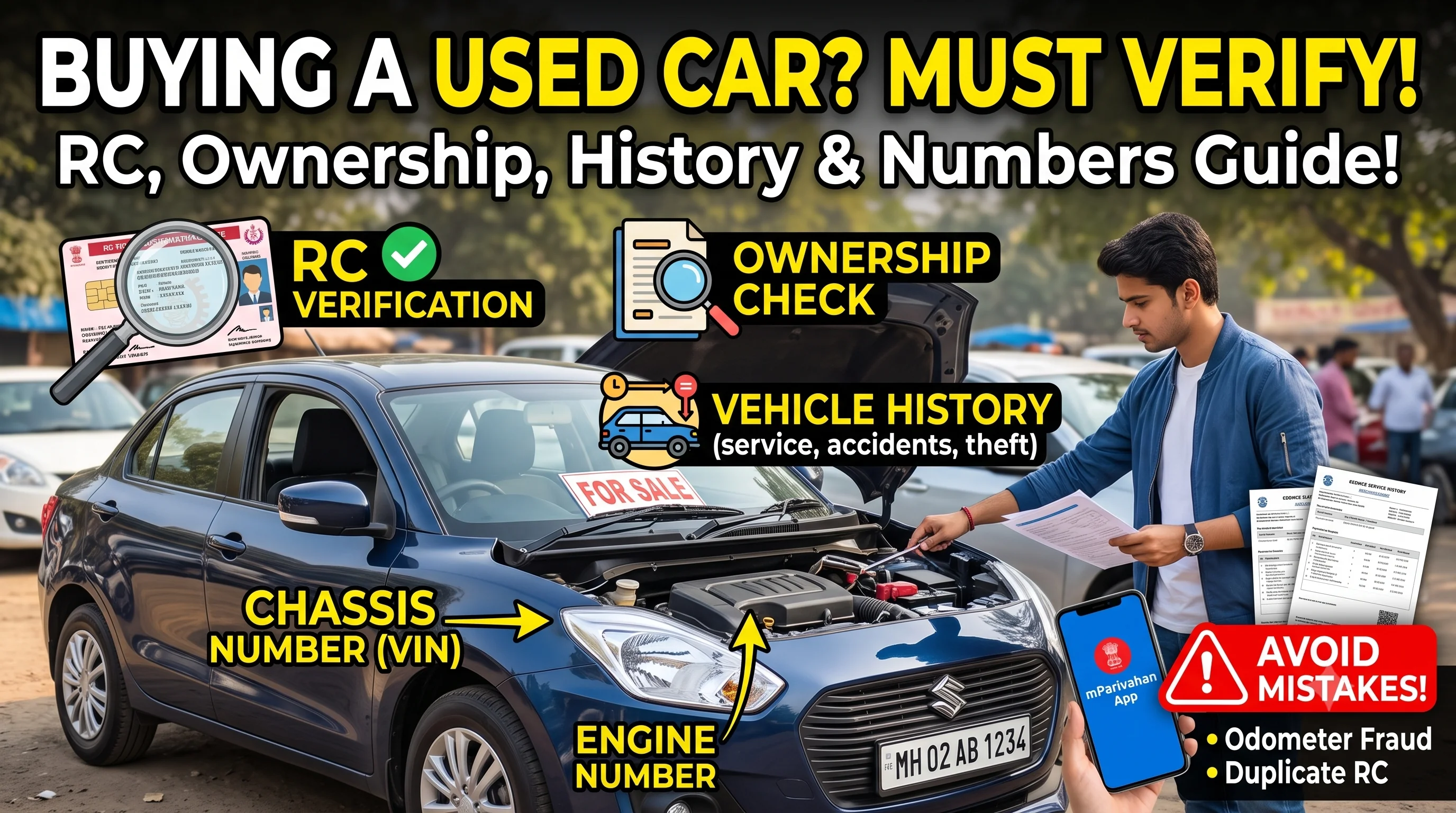
Buying a Used Vehicle?
Before purchasing a second-hand vehicle:
- Verify the Registration Certificate.
- Review the insurance policy.
- Confirm that the insurance can be transferred or updated if required.
- Check whether the registration details are accurate.
You should also review our Vehicle Ownership Transfer Guide before completing the purchase.
What Happens If the RC Is Lost?
If your Registration Certificate is lost or damaged, your insurance policy remains separate.
However, many ownership-related or registration-related procedures may still require a valid Registration Certificate.
Where appropriate, obtain a replacement before completing future documentation.
Does Insurance Affect RC Renewal?
These are separate processes.
Renewing your insurance policy does not automatically renew the Registration Certificate.
When your registration approaches its validity period, remember to renew your Registration Certificate online according to the applicable requirements.
Common Mistakes
- Assuming insurance replaces the RC.
- Forgetting to update insurance after ownership transfer.
- Carrying expired insurance while the RC remains valid.
- Believing that registration automatically renews insurance.
Expert Tip
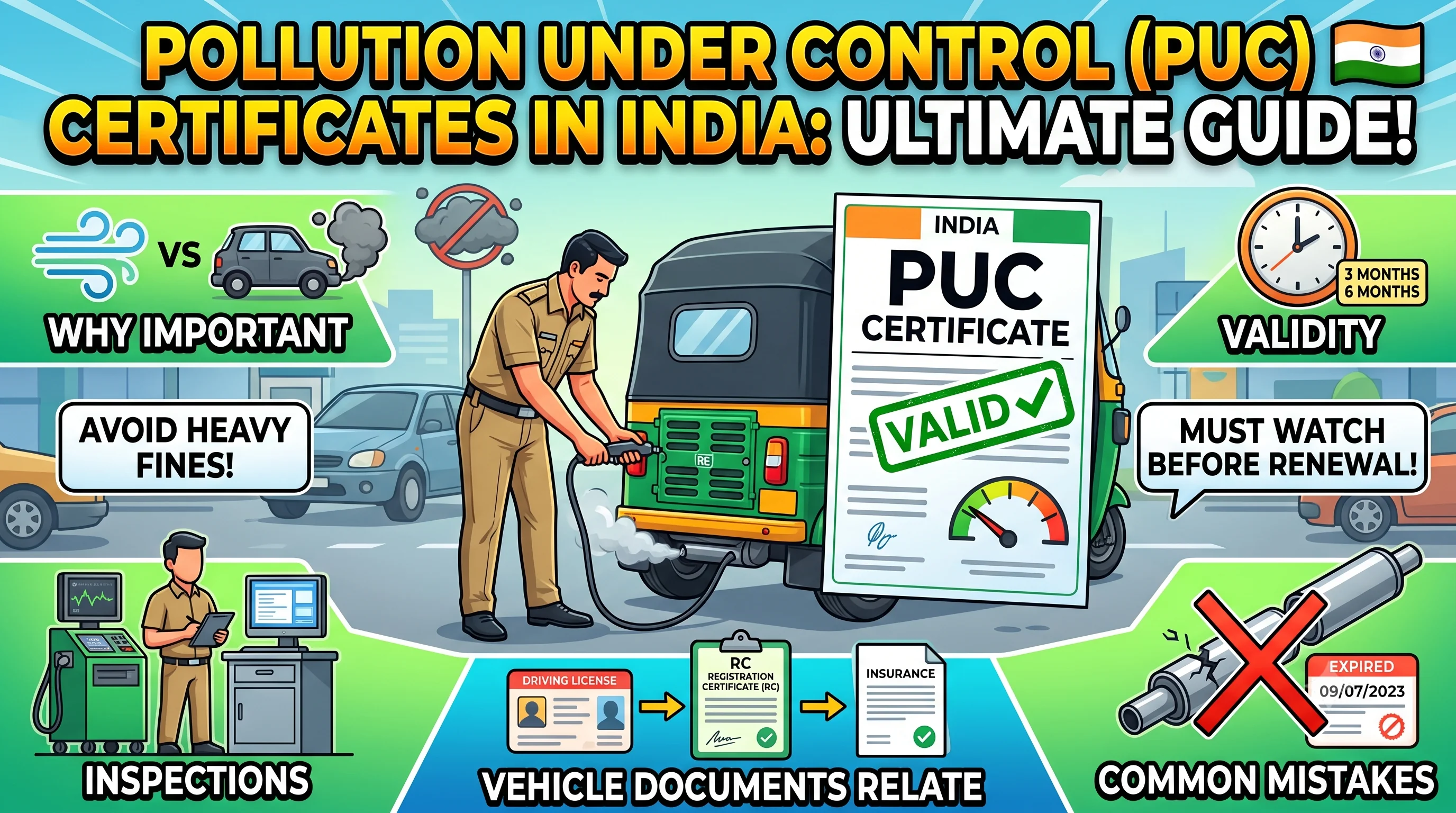
Keep your Registration Certificate, insurance policy, PUC Certificate, and driving licence together in one secure location. Reviewing them periodically helps ensure that all documents remain current and readily available when needed.
Frequently Asked Questions
The Registration Certificate and insurance serve different legal purposes. Both should be maintained according to the applicable regulations.
No. These are separate processes.
Yes. Ownership-related records and insurance documentation should both be updated where required.
Related Articles
Conclusion
The Registration Certificate and vehicle insurance are equally important, but they are not interchangeable. One establishes the legal identity of your vehicle, while the other provides financial protection against covered risks. Keeping both documents accurate, updated, and easily accessible helps ensure smoother vehicle ownership and simplifies future registration, transfer, and insurance-related processes.